Nothing goes to waste: how to store food
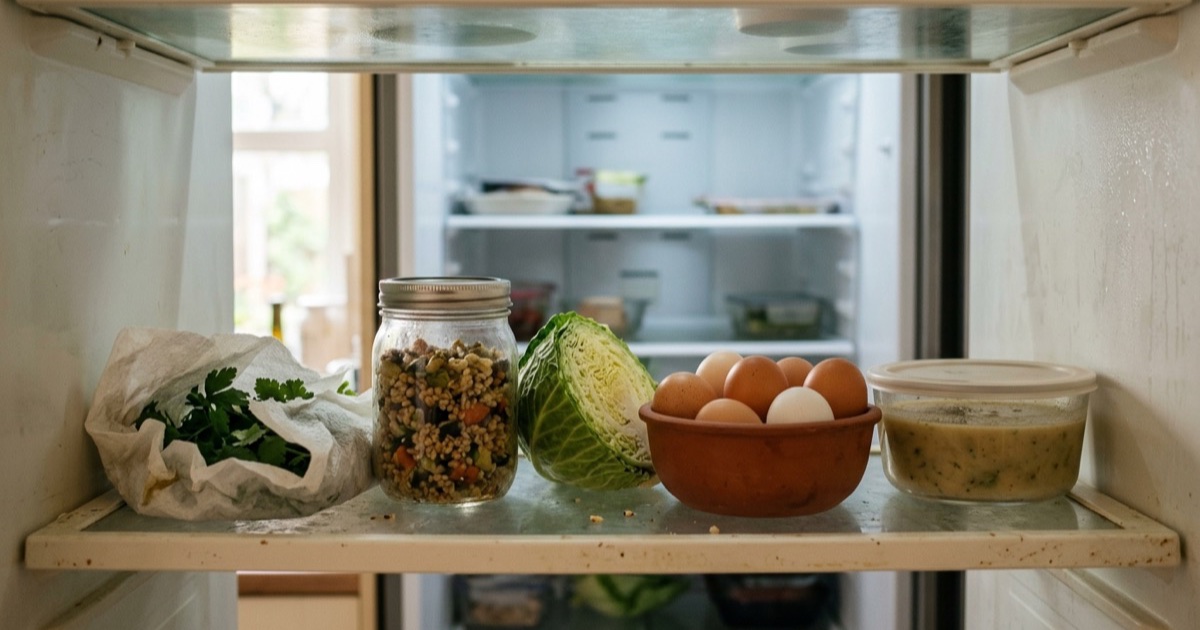
Where herbs should actually live, what must not sit next to what, and in which order to eat what you bought. Simple rules that halve what you throw away.
Order matters more than technique
The most expensive food is the food you bought and threw out. So the main rule is not about containers, it is about sequence: eat the fastest-spoiling things first.
Rough timings: herbs and spinach 2–3 days; mushrooms, broccoli, fish and chicken breast 2–4 days; tomatoes and cucumbers a week; carrots, cabbage and beetroot three weeks; potatoes and onions a month; grains and pasta a year.
Herbs
Do not wash herbs in advance — moisture speeds up rot. Wrap the unwashed bunch in a paper towel, put it in a bag and leave it loosely closed.
Basil is the exception: it turns black in the fridge. Keep it in a glass of water on the counter, like flowers.
What should not sit together
Apples, bananas and tomatoes release ethylene — a gas that makes their neighbours ripen and spoil faster.
- Keep apples away from carrots and herbs.
- Leave bananas on the counter, away from other fruit.
- Tomatoes dislike the fridge altogether: cold makes them taste woolly. The counter suits them better.
- Potatoes and onions ruin each other: onions give off moisture, and potatoes sprout because of it.
The freezer is a pause button, not a warehouse
Freeze right after shopping, not when something already looks “a bit off”. Split meat and fish into single-cook portions — you will never defrost a whole kilogram for one dinner.
Freeze well: meat, fish, bread, herbs (for soup), berries, peas, cooked soups and sauces. Freeze badly: cucumbers, salad leaves, boiled potatoes, sour cream and yoghurt.
Write the date on it. An unlabelled bag lives in the freezer for years.
Leftovers are tomorrow’s lunch, not rubbish
Cool leftovers quickly and refrigerate them within two hours, rather than waiting for the pot to cool on its own. They keep for 2–3 days.
The easiest trick is to pack them straight into single-portion boxes: a leftover then becomes a ready lunch instead of a pot nobody opens.
When a vegetable has gone limp
A soft carrot, a slightly wrinkled pepper, a limp courgette — none of these are spoiled. You would not eat them raw, but in a stew, a soup or a bake the difference disappears.
The rule is simple: no mould, no slime, no off smell — it goes into a hot dish today.
In short
Most of what gets thrown away was not spoiled, it was forgotten. One look inside the fridge before planning the week saves more food than any set of containers.