A week of meals in 15 minutes: step by step
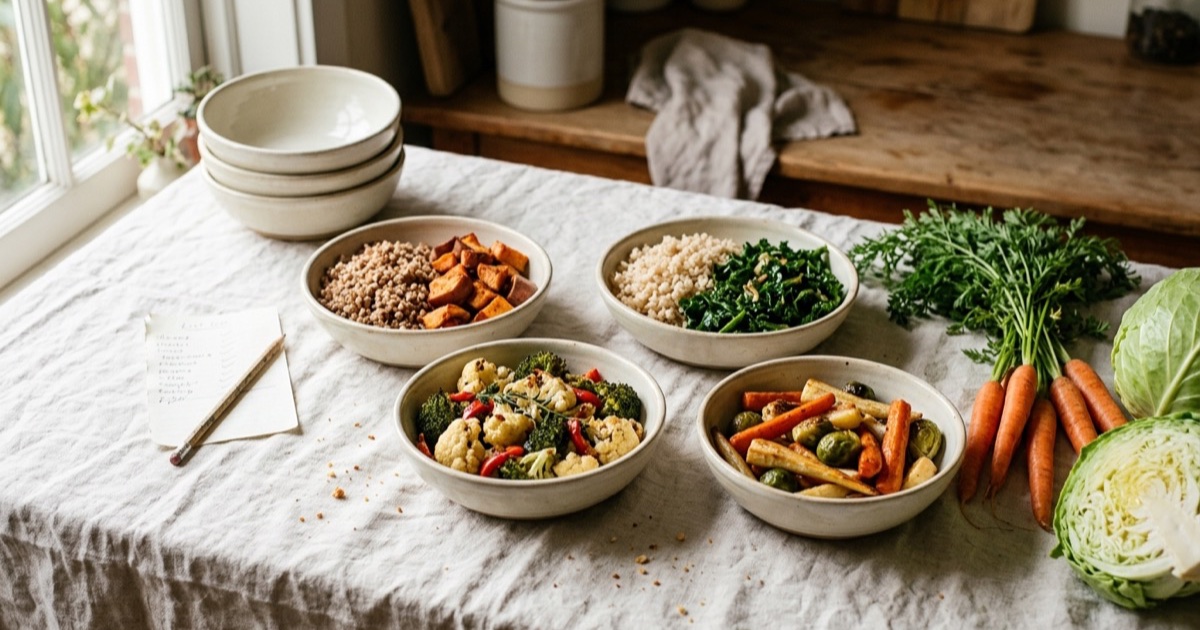
How to sit down once, plan seven days and stop deciding what to cook every evening. No spreadsheets and no extra spending.
Why “I’ll think of something” fails
The decision about dinner is made at the worst possible moment: you are hungry, tired and standing in front of an open fridge. In that state the fastest option wins, not the better one — scrambled eggs for the fourth night, or a delivery app.
The second problem is shopping. Without a plan you buy twice: first “just in case” because of a discount, then “because there is nothing to eat”. Half of the first batch quietly spoils in the meantime.
Step 1. Count the dinners you actually need
Do not plan seven dinners if on two of those evenings you will be out or working late. A realistic plan is four or five cooking sessions a week; the rest are leftovers or something simple.
The same goes for breakfast: if you only have coffee, do not invent seven breakfasts. The plan should describe your life, not an ideal one.
Step 2. Start with what you already have
Open the fridge and the freezer and write down everything that needs eating soon: an opened tub of yoghurt, half a cabbage, a bag of buckwheat. That is the foundation of the plan, not the things you are about to buy.
Smart Plate asks exactly this before building a week: whatever you tick goes into the meals first and never reaches the shopping list.
Step 3. Use few ingredients, each of them several times
The classic beginner mistake is seven different dishes from seven different sets of ingredients. You end up with seven half-used leftovers.
A workable ratio: three or four protein sources, three or four grains, five or six vegetables for the whole week. That gives more than ten different meals, because the difference comes from the method, not the ingredients: the same chicken and buckwheat becomes a warm bowl, a salad, or a pan with vegetables.
Step 4. Cook once, eat twice
Cook a double portion of the grain and the next day only the protein needs cooking. Roast a whole tray of vegetables and they will serve both a hot plate and a salad.
That is what keeps a week going — not willpower, but the fact that most dinners take ten minutes.
Step 5. Perishables go first
Fish, chicken breast, herbs, spinach and mushrooms last two to three days. Put them on Monday and Tuesday. Cabbage, carrots, potatoes and grains will wait until the weekend.
If something clearly will not be eaten fresh, portion it and freeze it straight away. It takes five minutes and saves half the shopping.
In short
Planning a week is not about discipline. It is about making one decision instead of seven. Even a rough plan saves money, because you shop for meals rather than for moods.